Discover Virtual Dressing Rooms: How AI & AR are Revolutionizing E-commerce
Learn how virtual dressing rooms powered by AI and AR are reshaping online shopping, boosting conversion and delighting customers.
Imagine purchasing apparel online with absolute certainty—knowing precisely how it will look and fit on you before clicking "add to cart." That is the powerful promise of virtual dressing rooms. This technology is not merely a novelty; it is a strategic tool that bridges the significant gap between online browsing and the tactile confidence of an in-store fitting room, empowering consumers to visualize garments on their own bodies from anywhere.
What Are Virtual Dressing Rooms and Why Do They Matter?
Let's be candid: online apparel shopping is frequently a gamble. Consumers are left to interpret ambiguous size charts, leading to a cycle of guesswork, disappointment, and the logistical burden of returns. This frustrating process is not just an inconvenience for shoppers; it represents a colossal financial and operational challenge for retailers.
The scale of this problem is staggering. According to a landmark report by the National Retail Federation and Appriss Retail, online return rates soared to 17.9%. This figure translates into an astonishing $247 billion in returned merchandise from online sales alone. This is not a mere "cost of doing business"—it is a fundamental inefficiency in the e-commerce model that virtual dressing rooms are uniquely positioned to solve.
Bridging the Digital Divide
A virtual dressing room is an essential e-commerce solution, not a technological gimmick. It directly addresses the primary source of uncertainty in online apparel purchases: fit. By leveraging a sophisticated blend of Artificial Intelligence (AI) and Augmented Reality (AR), it allows consumers to see how a garment will drape and conform to their specific body shape before committing to a purchase.
This technology transcends static size charts and idealized model photography, creating a deeply personal and interactive shopping experience. Instead of speculating whether a medium-sized shirt will be too restrictive, a user can view a realistic simulation on their own digital avatar. This immediate visual confirmation is a powerful catalyst for building buyer confidence.
“Being able to see how an outfit looks on a specific body type leads to more informed and confident shopping.” – Radosław Szeja, Retail Consulting Director at Netguru
In essence, virtual dressing rooms bring the most critical function of a physical store—the fitting room—into the digital domain. Let's analyze the core benefits for both consumers and retailers.
Virtual Dressing Rooms At a Glance
The value proposition of this technology is unambiguous, creating a symbiotic relationship between the consumer and the retailer. Here’s a concise summary:
| Benefit Category | Value for Consumers | Value for Retailers |
|---|---|---|
| Confidence & Certainty | Eliminates the guesswork of sizing and fit. See how clothes actually look on you. | Higher conversion rates because shoppers feel more confident hitting "buy." |
| Reduced Hassle | Minimizes the frustration and time spent on returning ill-fitting items. | Drastically cuts down on the massive costs and logistics of processing returns. |
| Personalized Experience | Moves beyond generic models to a "just for you" shopping journey. | Gathers valuable data on customer preferences and fit, leading to better products. |
| Engagement & Fun | Transforms passive online browsing into an interactive and enjoyable activity. | Increases brand loyalty and sets the business apart from competitors. |
Ultimately, this technology is about architecting a smarter, more efficient, and more satisfying shopping experience from initiation to completion.
Meeting Modern Shopper Expectations
Today's digital-native consumers demand more than a functional website; they expect engaging, personalized, and seamless experiences. Virtual try-on technology delivers precisely this, offering a solution that is both highly utilitarian and genuinely engaging. It transforms passive product discovery into an active, confidence-building interaction.
The benefits are comprehensive:
- For Shoppers: They eliminate guesswork, mitigate the risk of incorrect sizing, and bypass the inconvenience of the returns process.
- For Retailers: They can finally combat the exorbitant costs associated with returns, boost sales by instilling buyer confidence, and gain invaluable insights into how their products fit a diverse range of body types.
Virtual dressing rooms are not a fleeting trend. They represent a fundamental evolution toward a more intuitive, reliable, and satisfying e-commerce ecosystem.
How AI and AR Create Your Digital Fitting Room
The innovation behind a virtual dressing room is not a single technology but a brilliant synergy of several. It functions as a personal digital tailor and an interactive mirror combined, engineered to eliminate the ambiguity of online apparel shopping.
First, Augmented Reality (AR) serves as the interactive mirror. It overlays a digital representation of a garment onto a live view of the user via their device's camera. This is the mechanism that allows one to "see" how a dress might hang and move on their body, closing the gap between a static product image and physical reality.
Next, Artificial Intelligence (AI) operates as the expert tailor. AI algorithms are sophisticated enough to analyze a simple photo or video of a user and accurately infer their unique body shape and measurements. This capability far surpasses generic size charts, enabling predictions of optimal fit with remarkable accuracy and even suggesting styles that complement the user's physique.
The Tech Making It All Happen
These technologies are not merely complementary; they are deeply intertwined. Their synergy is what enables a seamless and believable try-on experience. The pace of advancement is rapid, particularly when examining how AI has revolutionized and accelerated XR, VR, and AR technologies.
Here is a look at the core components:
- 3D Modeling: This is the process of creating a digital twin of a garment. A two-dimensional product photo is meticulously transformed into a three-dimensional model that understands fabric properties like drape, fold, and stretch.
- AI-Powered Size Recommendation: Instead of relying on a generic size selection, the AI considers the user's specific proportions to recommend the size most likely to provide an ideal fit. This is critical, as ill-fitting items are a primary driver of the $247 billion in annual online returns.
- AR Visualization: In the final stage, the 3D garment model is projected onto the user's image in real-time, providing a realistic preview of the final look.
The traditional online shopping loop is a known point of friction for consumers: guess a size, await delivery, experience disappointment upon trying it on, and then navigate the returns process.
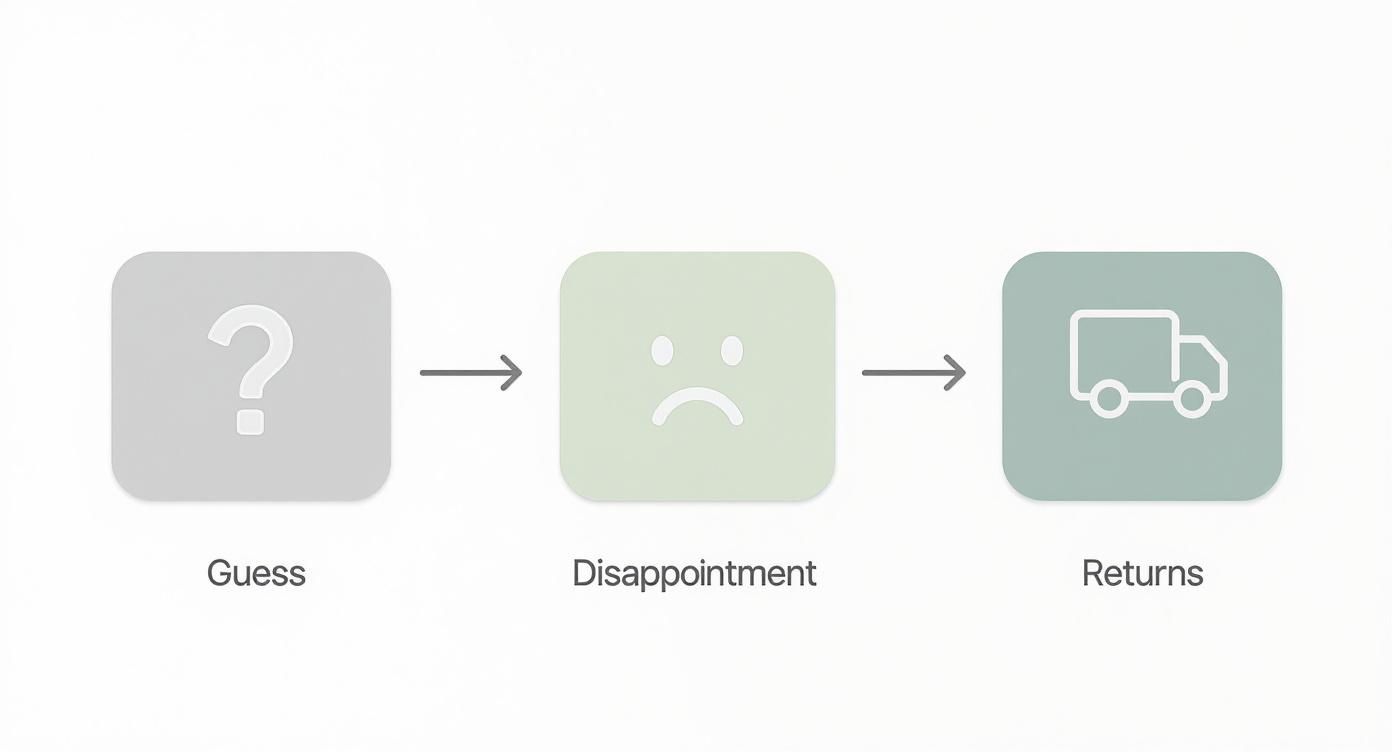
Virtual dressing rooms are engineered to disrupt this cycle by empowering consumers with the necessary confidence before the point of purchase.
Building Your Digital Self
The entire digital fitting room experience begins with understanding the user's body. Some systems, like a virtual try on clothes app, will request basic information such as height and weight. More advanced solutions create a highly accurate avatar from a single user-uploaded photo. The AI then utilizes this data to map the 3D clothing models onto the user's digital form.
“The ability to upload one's photo, instead of simply choosing the size, raises the stakes. This type of personalization adds more reality to the experience and makes the process much more enjoyable.” – Netguru Retail Experts
The objective is to ensure the virtual garments appear as more than a simple overlay. The technology is sophisticated enough to simulate how fabric would realistically interact with the body's contours and movements, creating a preview that is authentic, informative, and empowers confident purchasing decisions.
The Real-World Wins of Virtual Try-On Tech
While the technology powering virtual dressing rooms is impressive, the primary driver for brand adoption is not novelty. Businesses are investing because this technology delivers a significant return on investment by addressing e-commerce's most persistent and costly challenges.
The foremost problem it solves is product returns.
Returns represent a financial drain for online retailers, eroding profit margins and creating severe logistical complexities. By enabling shoppers to visualize how an item will look and fit before purchasing, virtual try-ons directly address the primary cause of returns: poor fit. This provides the confidence needed to complete a purchase and dramatically reduces the likelihood of the item being sent back.
Turning Browsers into Buyers
Beyond cost reduction, virtual try-on technology is a powerful tool for driving sales. When a customer is confident about a purchase, conversion rates increase. The technology transforms passive browsing into an active, engaging experience that increases time-on-page and builds a stronger connection to both the product and the brand.
This increased engagement also yields a wealth of data. Retailers gain direct insight into which styles and fits resonate with different body types. This intelligence can be used to refine product designs, optimize inventory management, and develop more targeted marketing campaigns, creating a virtuous feedback loop.
At its core, a virtual dressing room uses AR to layer digital clothing onto a user's image, while AI analyzes measurements to recommend the best fit. This directly addresses the biggest uncertainty in online shopping. The impact is substantial; market data indicates that implementing this technology can reduce returns by up to 40%. You can explore the financial implications in this detailed market analysis.
More Than Just a Feature—It's a Strategy
Integrating virtual try-on is not merely adding a new feature to a product page; it is a strategic decision that fortifies the bottom line and enhances sustainability efforts.
“Reducing returns is not just a cost-saving measure; it is a strategic imperative for profitability and sustainability,” states a report from McKinsey & Company.
The business case is compelling:
- Fewer Returns: Directly cuts operational costs and reduces the environmental footprint of reverse logistics.
- Higher Conversions: Transforms purchase hesitation into completed sales by providing shoppers with critical fit information.
- Better Engagement: Creates a memorable, "sticky" user experience that builds brand loyalty.
- Smarter Insights: Provides the data needed to make informed decisions across the entire value chain, from design to inventory.
For shoppers, the ability to try on clothes online finally smooths out the biggest friction point in their buying journey. For retailers, it transforms one of their largest liabilities into a powerful competitive advantage.
Putting Virtual Dressing Rooms into Practice
The concept is compelling, but how does a business transition from idea to a functional, customer-centric feature? Implementing a virtual dressing room is not a turnkey process. It requires strategic choices tailored to your brand and your customers' needs.
The initial step is selecting the appropriate technology stack. If your customers primarily shop via mobile, a seamless web-based plugin may be the optimal solution. For a flagship retail location, an in-store AR mirror could create a high-impact, memorable experience. The decision hinges on understanding where and how your audience engages with your brand.

Crafting a Flawless User Experience
Regardless of technological sophistication, if the user experience (UX) is clunky or unintuitive, adoption will fail. The experience must be seamless, efficient, and provide a clear value-add.
A superior experience begins with frictionless onboarding. Customers should be able to engage with the tool immediately, whether by uploading a photo or answering a few simple questions. This first interaction is critical in setting user expectations.
"The ability to upload one's photo, instead of simply choosing the size, raises the stakes. This type of personalization adds more reality to the experience and makes the process much more enjoyable." – Netguru Retail Experts
Performance is non-negotiable. The tool must be fast and the digital garments must appear realistic. When a customer tries on a virtual dress, it needs to drape and move like actual fabric. This verisimilitude is what builds trust and drives conversion. Tools like an AI clothes changer offer a straightforward way for people to see different outfits on their own photos, making the process feel both personal and practical. You can see an example here: https://dreamshootai.com/tools/ai-clothes-changer.
Defining and Measuring Success
How do you quantify the impact of this investment? By tracking the right key performance indicators (KPIs). These metrics provide a clear view of the real-world impact and ROI.
Key metrics to monitor include:
- Conversion Rate Uplift: The ultimate validation. Are users who engage with the virtual try-on feature more likely to make a purchase?
- Return Rate Reduction: A critical metric. Even a marginal decrease translates to significant cost savings and improved customer satisfaction.
- User Adoption and Engagement: Are customers using the tool? What is the average session duration? High engagement signals that you have created a valuable user asset.
While often perceived as a Western e-commerce trend, the Asia-Pacific region is currently the fastest-growing market for this technology. Physical stores remain dominant, with 66% of the market share in 2024 driven by retailers implementing in-store AR mirrors for real-time fit analysis. This hybridization of digital and physical retail is setting the global pace, as detailed in research on the virtual fitting room market.
The Next Wave of Innovation in Virtual Retail
Virtual dressing rooms are not the final destination; they are the foundational layer for a new paradigm in retail. The innovations emerging today are setting the stage for a future where online shopping is hyper-personalized, immersive, and profoundly intuitive.
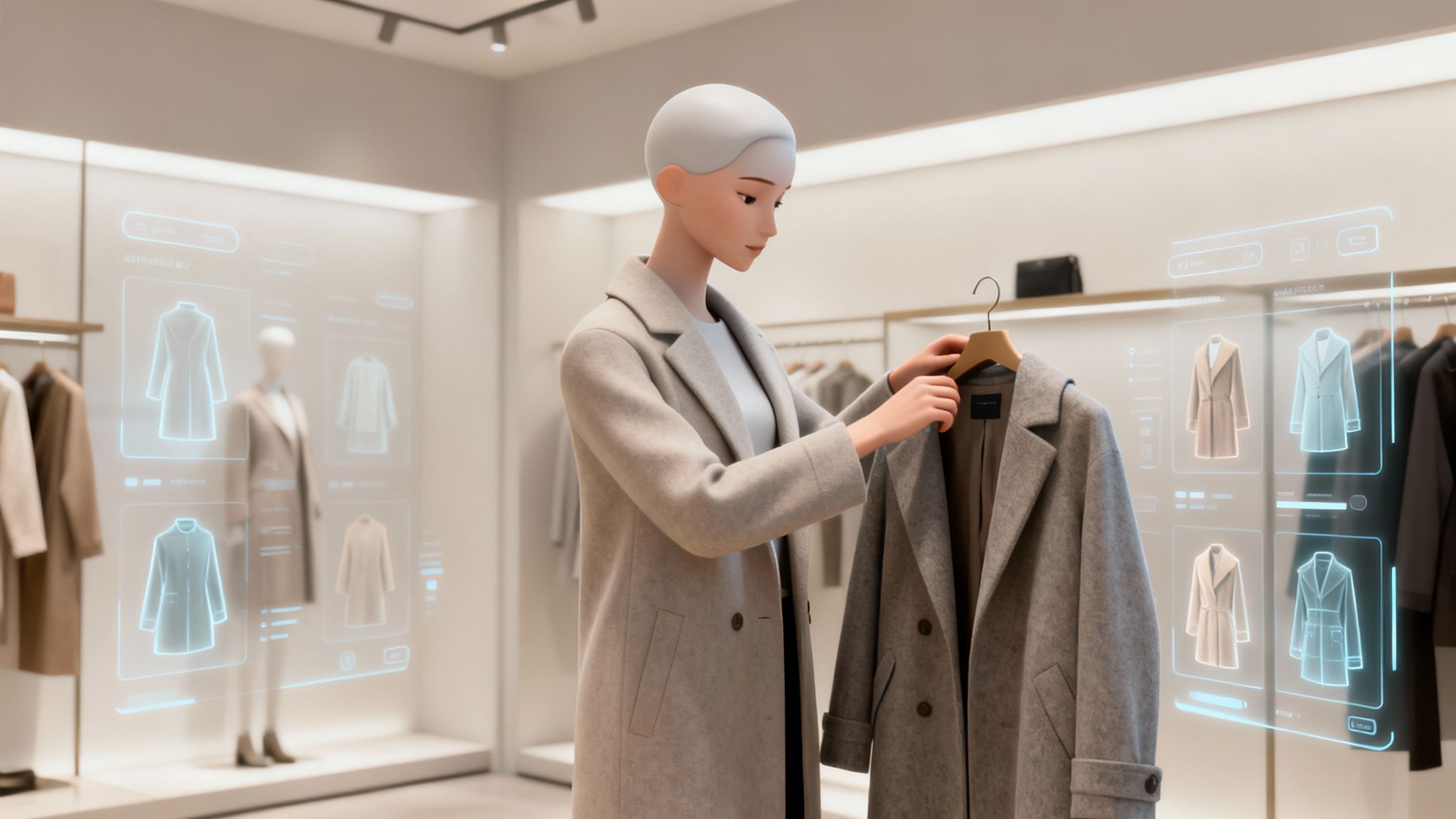
The immediate future is focused on hyper-personalization. Envision an AI-powered virtual stylist that moves beyond fit visualization to curate entire wardrobes based on your purchase history, style profile, and even calendar events. This is not merely a recommendation engine; it is a bespoke shopping concierge.
The Rise of Immersive Commerce
The next significant leap involves integrating virtual try-on technology into persistent digital worlds, or the metaverse. Imagine your personal avatar entering a virtual storefront, trying on digital garments, and shopping with friends in a shared, social environment. This transforms shopping from a solitary task into a communal activity.
For a deeper understanding of this trajectory, it is useful to explore the concept of V-Commerce: A New Trend in Digital Retail.
Other groundbreaking advancements are on the horizon:
- Haptic Feedback: Technology allowing users to "feel" the texture of fabrics through their devices, distinguishing between silk, denim, and wool without physical contact.
- Advanced Body Scanning: Utilizing the native sensors in smartphones to capture near-perfect body measurements, leading to unparalleled fit accuracy.
This relentless innovation is fueling significant market growth. The global virtual dressing rooms market is projected to reach $11.81 billion by 2029, expanding at a compound annual growth rate (CAGR) of 14.1%. This growth is driven by tangible advancements in XR, 3D scanning, and virtual stylist AI that are making the technology more accessible and effective. You can examine these market projections and their drivers here.
Navigating the Road Ahead
Of course, challenges remain. Achieving true photorealism in digital garments is an ongoing objective, and navigating the complex landscape of user data privacy is paramount. As these tools become more personalized, ensuring transparent and ethical data handling is non-negotiable.
"To deliver truly personalized services, retailers will need to be transparent about what data they are collecting and how they are using it. Building trust is essential for long-term customer relationships," advises a report from Deloitte on the future of retail.
Despite these hurdles, the trajectory is clear. Virtual dressing rooms are evolving from a novel tool into a core component of the future retail infrastructure, paving the way for a shopping experience that is more connected, personalized, and engaging than ever before.
Got Questions About Virtual Dressing Rooms? We've Got Answers.
As virtual try-on technology transitions from an emerging innovation to an essential e-commerce feature, questions naturally arise. Here are authoritative answers to the most common inquiries.
How Accurate Is This Stuff, Really?
This is the critical question. The accuracy of a virtual dressing room is contingent upon the sophistication of the underlying technology and the quality of the input data. While basic tools provide a general approximation, top-tier solutions powered by advanced AI and computer vision achieve remarkable precision.
These systems do not simply overlay a 2D image. They conduct a detailed analysis of the user's body geometry to recommend the correct size and simulate how different fabrics will hang and drape on their specific form. This level of detail directly addresses the core uncertainty that drives returns. With a high-quality system, the on-screen visualization is a highly reliable predictor of the in-person fit.
What Kind of Fancy Equipment Do I Need?
For the vast majority of consumers, the answer is excellent: you do not need any specialized equipment. Most virtual dressing room solutions are designed to function seamlessly with the devices you already own.
Typically, a smartphone, tablet, or computer with a standard camera is all that is required. Simpler web-based tools may only ask for a static photo, while more immersive applications utilize the device’s camera for a live AR experience. No additional hardware or complex setup is necessary.
"Our virtual try-on technology has led the way in helping shoppers imagine how clothes look on different body types. Now you can virtually try billions of apparel listings on yourself, just by uploading a photo." – Lilian Rincon, Senior Director of Product, Shopping at Google
Is My Personal Data Safe?
Data security is a paramount concern. Reputable companies in this space adhere to stringent data protection protocols. They typically employ robust encryption to safeguard user information and often anonymize data, meaning personal identifiers are decoupled from the images used for the try-on process.
Nevertheless, it is always prudent for consumers to exercise due diligence. Before uploading photos or personal information, review the privacy policy of the retailer or technology provider. A brief examination will clarify how your data is being used, stored, and protected, allowing you to engage with the technology with complete peace of mind.
Ready to see how AI can transform your own photos into stunning, professional-quality images? With DreamShootAI, you can create themed photoshoots, perfect your look with the Virtual Try-on feature, and bring your pictures to life with AI video. Skip the expensive studio and start creating today at https://dreamshootai.com.
Written by Jocelyn Grey for the DreamShootAI blog.
Spotted something out of date? Tell us at [email protected] and we'll fix it.